AI can write for you, but write yourself anyway
March 18, 2026
With recent AI advances, I feel more strongly than ever that we all should write, specifically with no or minimal AI assistance.
Writing to think
Writing is thinking. To write well is to think clearly.
If people cannot write well, they cannot think well; and if they cannot think well, others will do their thinking for them.
I started writing more this year, and its biggest benefit so far has been the mental clarity. Putting my jumbled thoughts down into words has forced them to be clearer and more structured.
The writing process is iterative:
If you're scared of sharing your writing online, note that sharing is completely optional. We don't all have to be influencers. Write for yourself. Write a journal entry, write a technical post, write a romance novel, write about something you don't know much about. Most importantly, write whatever you want.
And if you happen to think that your writing could be helpful for others, share it.
Writing to do great work
We talk a lot about writing well for AI (i.e., prompt engineering) but not enough about writing well for humans.
The most advanced models are still terrible at writing, at least when it comes to writing like an actual human. This is our opportunity: I'm positive that being able to write well will help one's career, especially as AI-written content becomes more ubiquitous.
Think about the last time you read an obviously AI-generated post. It felt icky, didn't it? I hate it, and I know people hate it, too.
So when you write at work -- an email, Slack message, or presentation -- having people actually read and want to read your writing means your voice will be heard and your organizational influence will increase.
Writing to connect
Online discourse in tech is an echo chamber, and it loves fear- and hype-driven topics. For example, this is what shows up on TechCrunch's homepage right now as I'm writing this post:
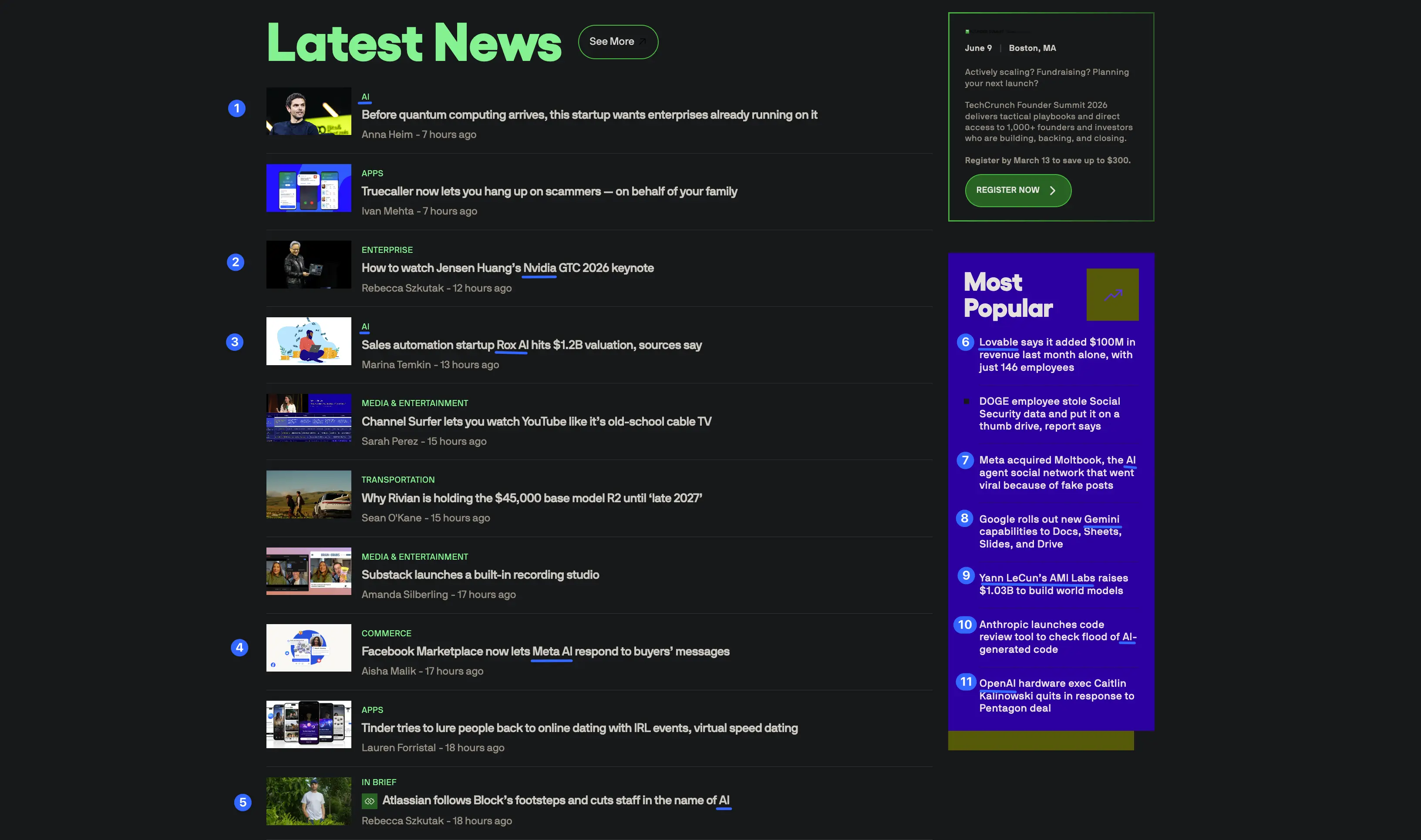
11 AI or AI-related articles in this screenshot. They covered half of the "Latest News" articles and almost all the "Most Popular" articles. There is nothing wrong with covering AI, but this makes me feel like they're shoving AI down my throat.
Now let me introduce you to my oasis, my RSS feed:
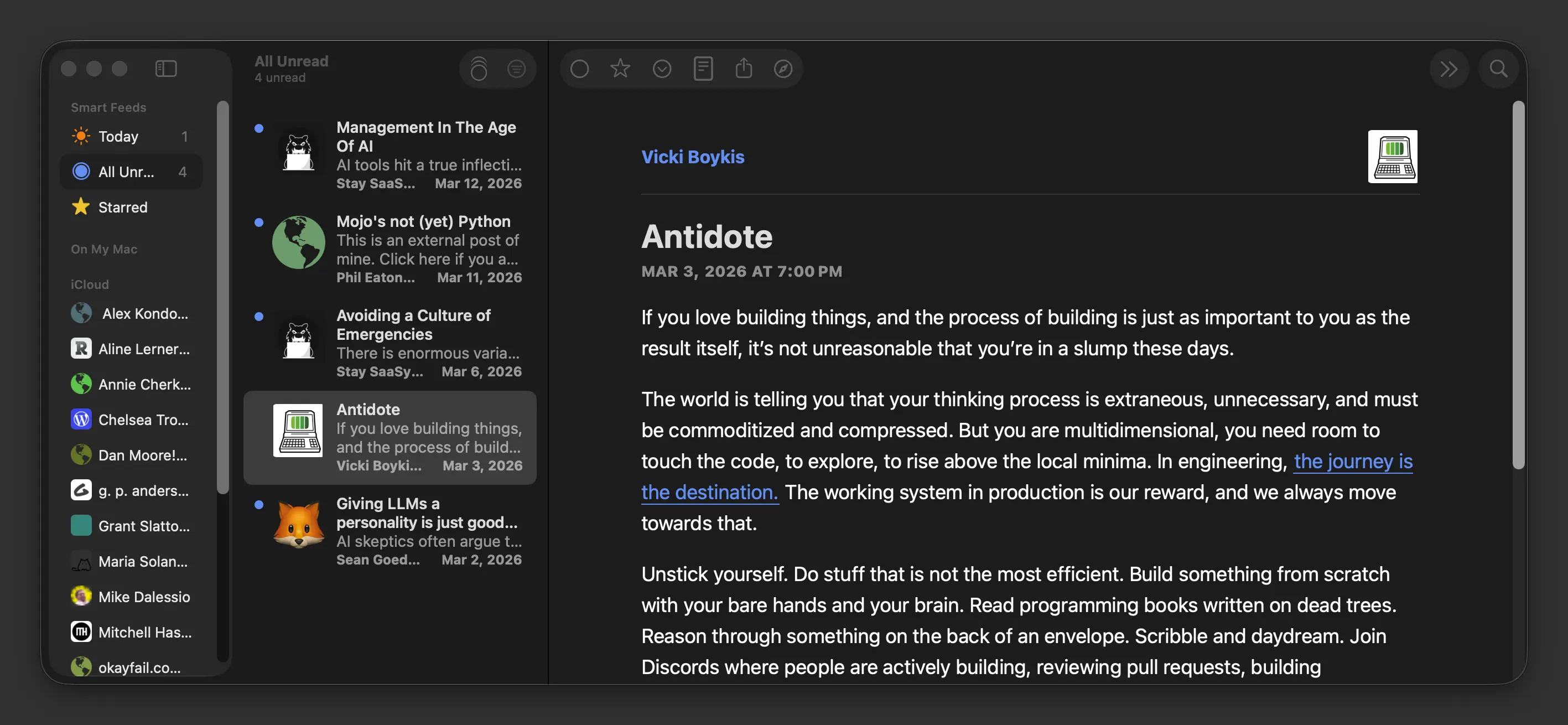
This is a personal newsfeed of writings from my favorite humans like Vicky Boykis, Mitchell Hashimoto, Ty Sloane, and Sean Goedecke.
Sure, they probably all have written about AI, too, but what sets them apart is each person's "voice". Each has a distinct way of conveying their thoughts in words, each making me feel something different as a reader. I feel a sense of closeness and connectedness to each writer in a way that AI-generated content doesn't.
The content that we see online will be more and more AI-generated. AI slop is getting built on top of slop on top of more slop, and VCs are talking about an "agent-first" internet.
What's going to happen to our internet? My ideal version of the internet exists to connect us, to show us the humanity in each other, and I don't think that AI can do that in a genuine way. I'm afraid we'd lose the internet as we know it if we don't share our voices online at all.
Share to X, Hacker News, LinkedIn